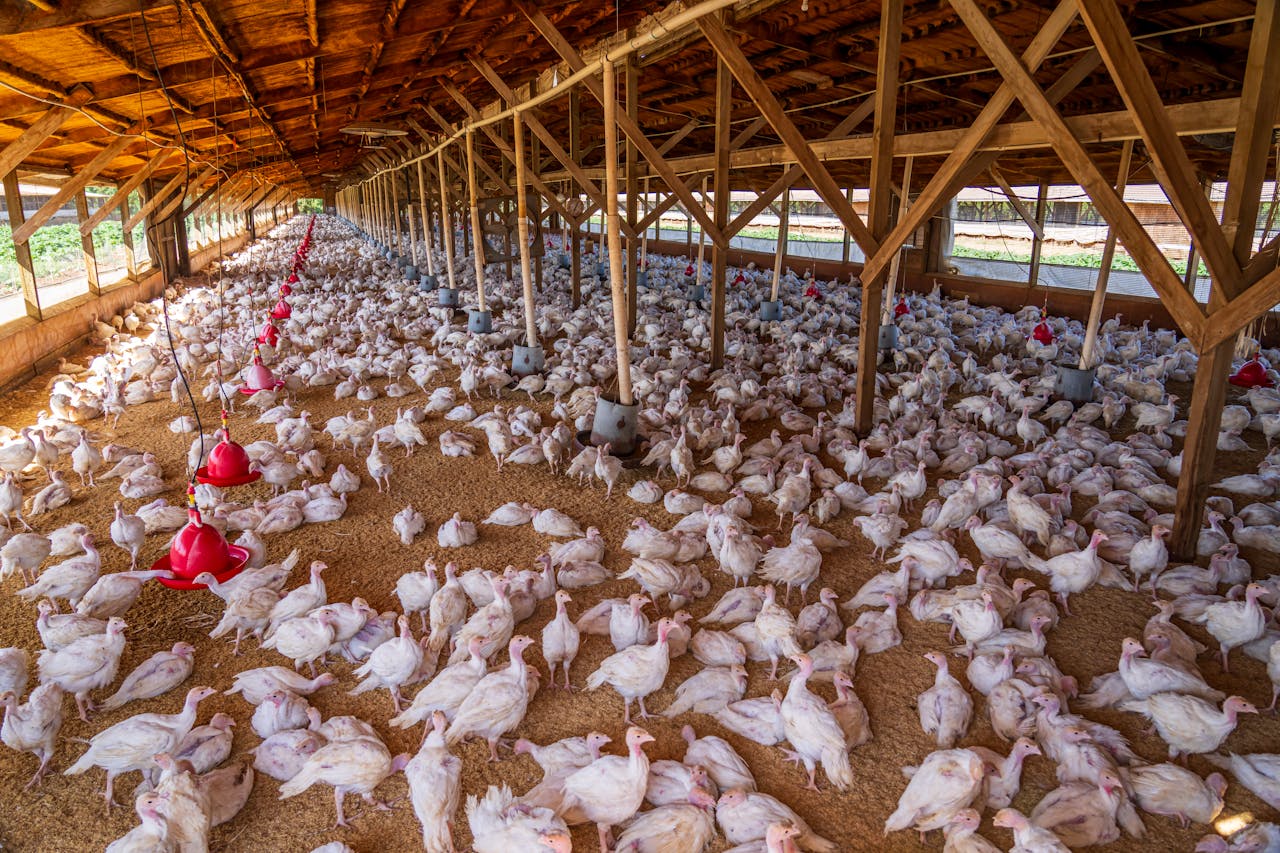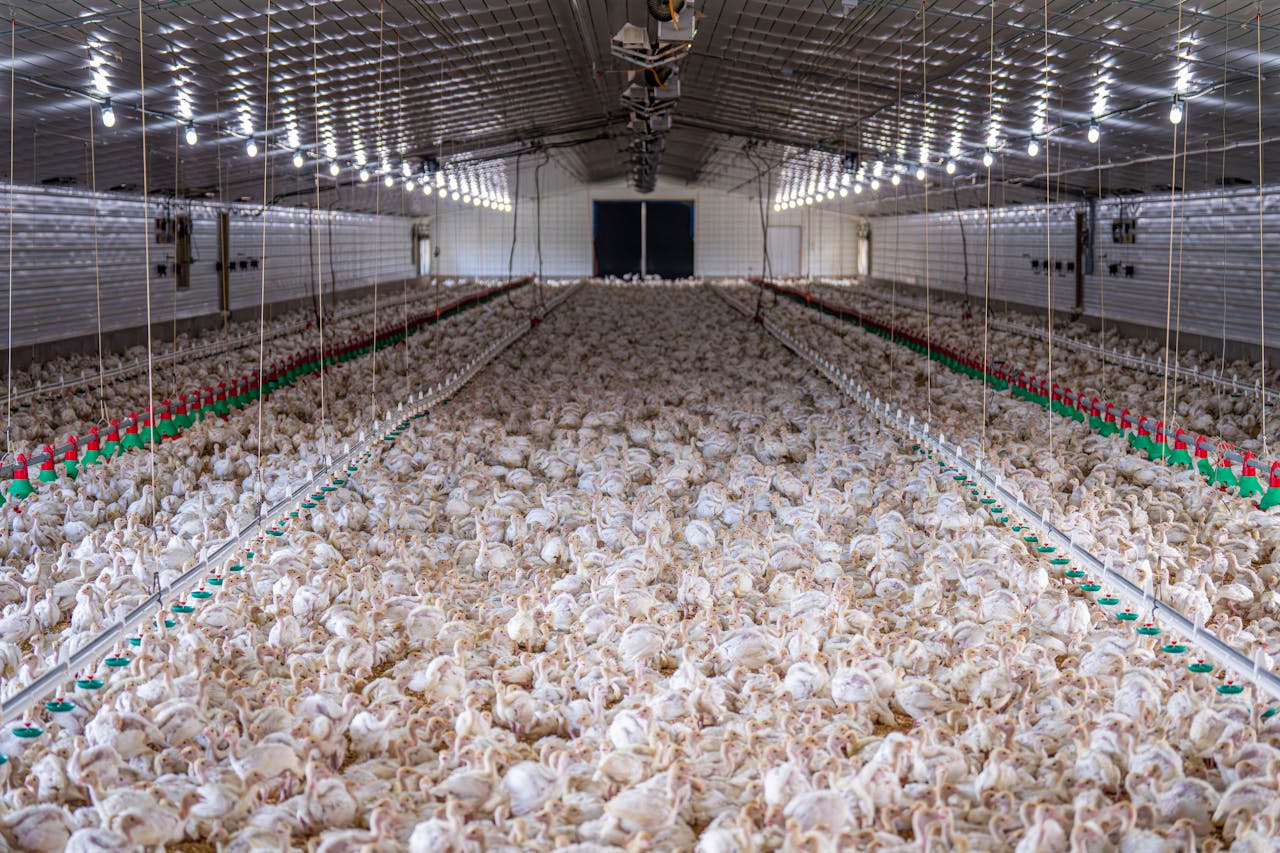

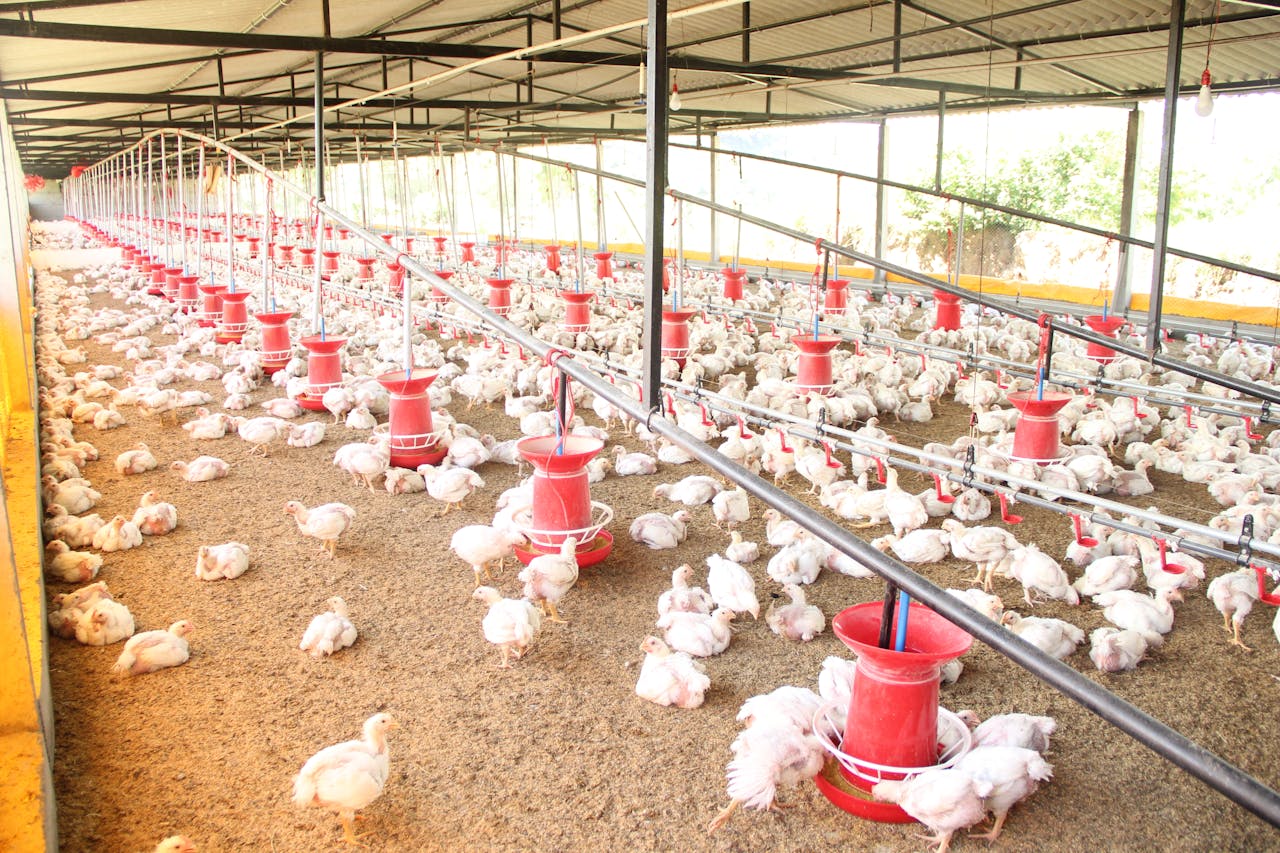
Poultry farming under a controlled shed is a modern and scientific method of raising chickens for meat (broilers) or eggs (layers). This method ensures optimal environmental conditions for the birds to achieve higher productivity, better health, and efficient resource utilization. Below is a concise overview of how poultry farming is conducted in a controlled shed environment:
1. Shed Design and Construction
Controlled sheds are well-insulated, mechanically ventilated, and designed to accommodate large numbers of birds. Key features include:
-
Insulated walls and roof to regulate temperature.
-
Cooling pads and exhaust fans to manage heat during summers.
-
Automated curtain systems for airflow control.
-
Biosecurity measures like footbaths, fencing, and separate entry zones.
2. Climate Control
Maintaining ideal temperature, humidity, and air quality is crucial:
-
Temperature: Maintained using heating systems (gas brooders, heaters) in winter and ventilation systems in summer.
-
Ventilation: Ensures fresh air supply and removes harmful gases (ammonia, CO₂).
-
Humidity: Kept between 50–70% for optimum bird health.
3. Lighting Program
Controlled lighting is used to stimulate growth and egg production:
-
Broilers: Provided with 16–23 hours of light depending on age.
-
Layers: Given consistent light duration to maintain egg-laying cycles.
4. Automated Feeding and Drinking
-
Feeding: Automatic feeders distribute a balanced diet formulated for each growth stage.
-
Watering: Nipple drinkers or bell drinkers provide clean water, essential for digestion and growth.
5. Litter Management
The floor is covered with litter (wood shavings, rice husk) to absorb moisture:
-
Regular monitoring and removal of wet spots prevent disease.
-
Proper litter management controls odor and maintains hygiene.
6. Health and Biosecurity
-
Regular vaccination schedules are followed.
-
Antibiotics and supplements are used under veterinary supervision.
-
Restricted access, disinfection points, and rodent control help prevent disease entry.
7. Monitoring and Record-Keeping
-
Temperature, humidity, mortality, feed consumption, and weight gain are tracked daily.
-
Data helps in performance analysis and early problem detection.
8. Harvesting or Egg Collection
-
Broilers are harvested after 5–7 weeks when they reach market weight.
-
Layers start laying around 18 weeks of age and continue up to 72 weeks.
Conclusion
Controlled shed poultry farming is a highly efficient and scalable method that minimizes external risks and maximizes output. With proper management and adherence to biosecurity protocols, it ensures better profitability, bird welfare, and product quality for the poultry industry.